
Full spectrum conversion: every wavelength, one camera.
The short answer
My Nikon Z7II is converted to full spectrum, and it is the camera I reach for most. On a fixed-wavelength body like my 665nm D750, the decision was made once, at the workbench. On the full-spectrum body the decision is made per frame, at the filter ring — and because a mirrorless camera focuses on the imaging sensor itself, focus stays accurate at every wavelength with no per-lens calibration.
How the filter becomes the camera
With clear glass over the sensor, the camera sees roughly 350nm to 1100nm. Everything you do next is subtraction:
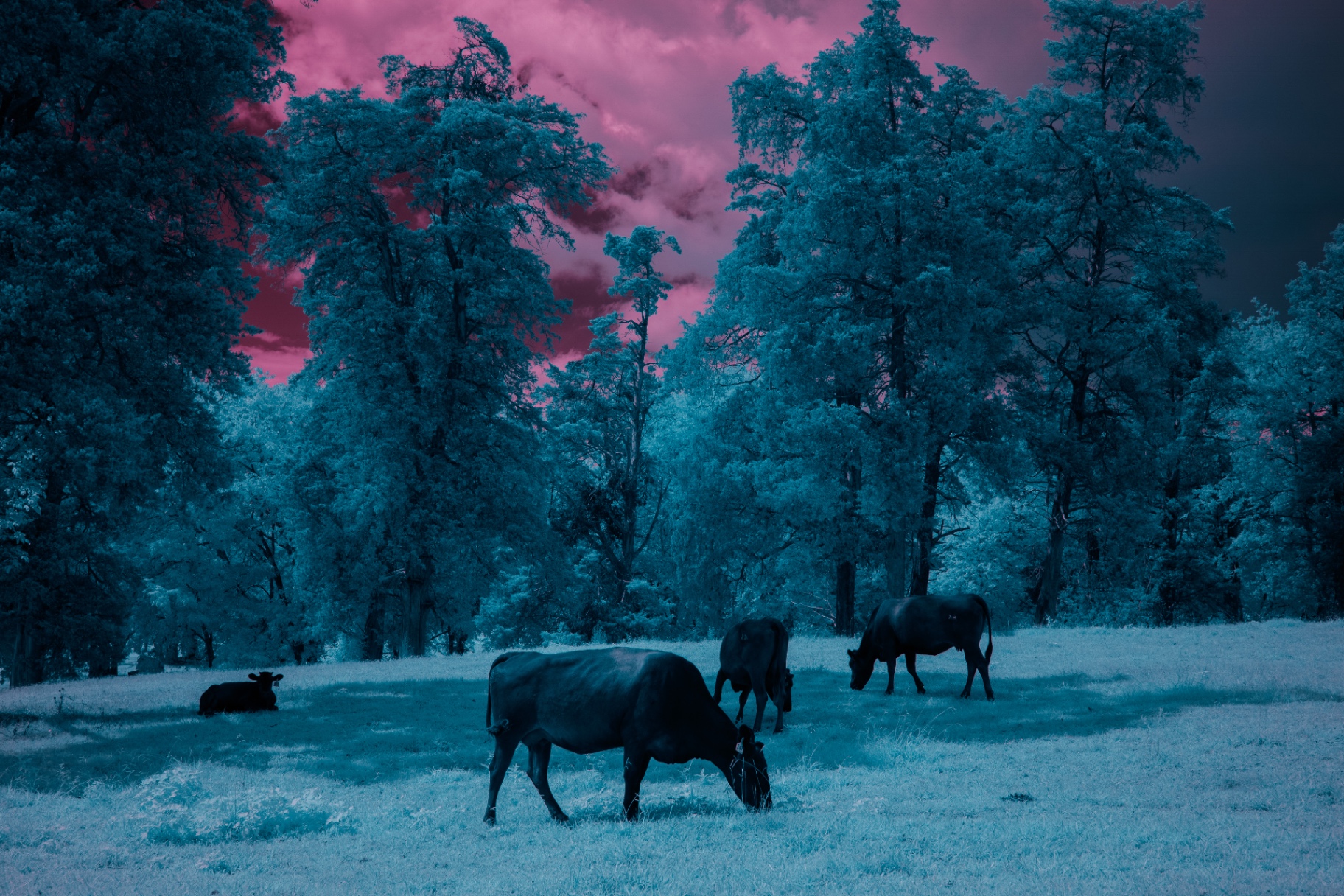
- 590nm filter — warm gold false color. 665nm — balanced pink-and-blue color. 720nm — the classic white-foliage standard. 850nm — pure black and white. The infrared lens filter comparison covers each in depth.
- IRChrome filter — the red-foliage Aerochrome look with no channel swap in post.
- UV/IR-cut (hot mirror) filter — puts back what the conversion removed, so the camera shoots ordinary visible-light color again. A full-spectrum body can genuinely be your only camera.
Clip-in filters vs screw-on filters
Full-spectrum shooters choose the wavelength with one of two filter types:
- Clip-in filters drop into the mirrorless body in front of the sensor. One filter serves every lens, adds no vignetting, and nothing on the lens changes. My default way of working — but they exist only for specific mirrorless mounts, and swapping them in the field takes a clean, careful hand.
- Screw-on lens filters thread onto each lens. Universally compatible — DSLRs included — and easy to swap outdoors, but you need one per thread size (or step-up rings), and thick rings can vignette on wide lenses.
Full spectrum vs a fixed-wavelength conversion
- Choose full spectrum if you want to experiment across wavelengths, shoot the Aerochrome look, or keep one body that can still take normal photographs. This is the flexible, future-proof route — and the one I would pick first today.
- Choose a fixed wavelength (like a dedicated 720nm or 665nm conversion) if you know exactly the look you want, prefer an optical viewfinder on a DSLR, or want a grab-and-go body with nothing to screw on. It is simpler and slightly cheaper.
- Either way, mirrorless wins for focus reliability — the sensor-plane autofocus does not care which wavelength is passing. The best camera for infrared photography guide compares the bodies I have owned.
Next step
Convert a camera to full spectrum
Links to Kolari Vision are affiliate links: if you buy through them the site earns a commission at no extra cost to you. They are the shop my own conversions and filters came from, and the recommendation would be the same without the program — full disclosure.
Common questions
Does a full-spectrum conversion hurt image quality?
Can a full-spectrum camera still take normal photos?
Is full spectrum more expensive than a fixed conversion?
Which cameras can be converted to full spectrum?
Related guides
Infrared lens filters compared
590nm, 665nm, 720nm, 850nm and IRChrome side by side.
Best infrared camera to convert
Notes on the ten bodies behind this archive.
Full-spectrum conversions and clip-in filters
The journal version of this story.
The camera conversion field guide
Wavelengths, DSLR vs mirrorless, and conversion services.