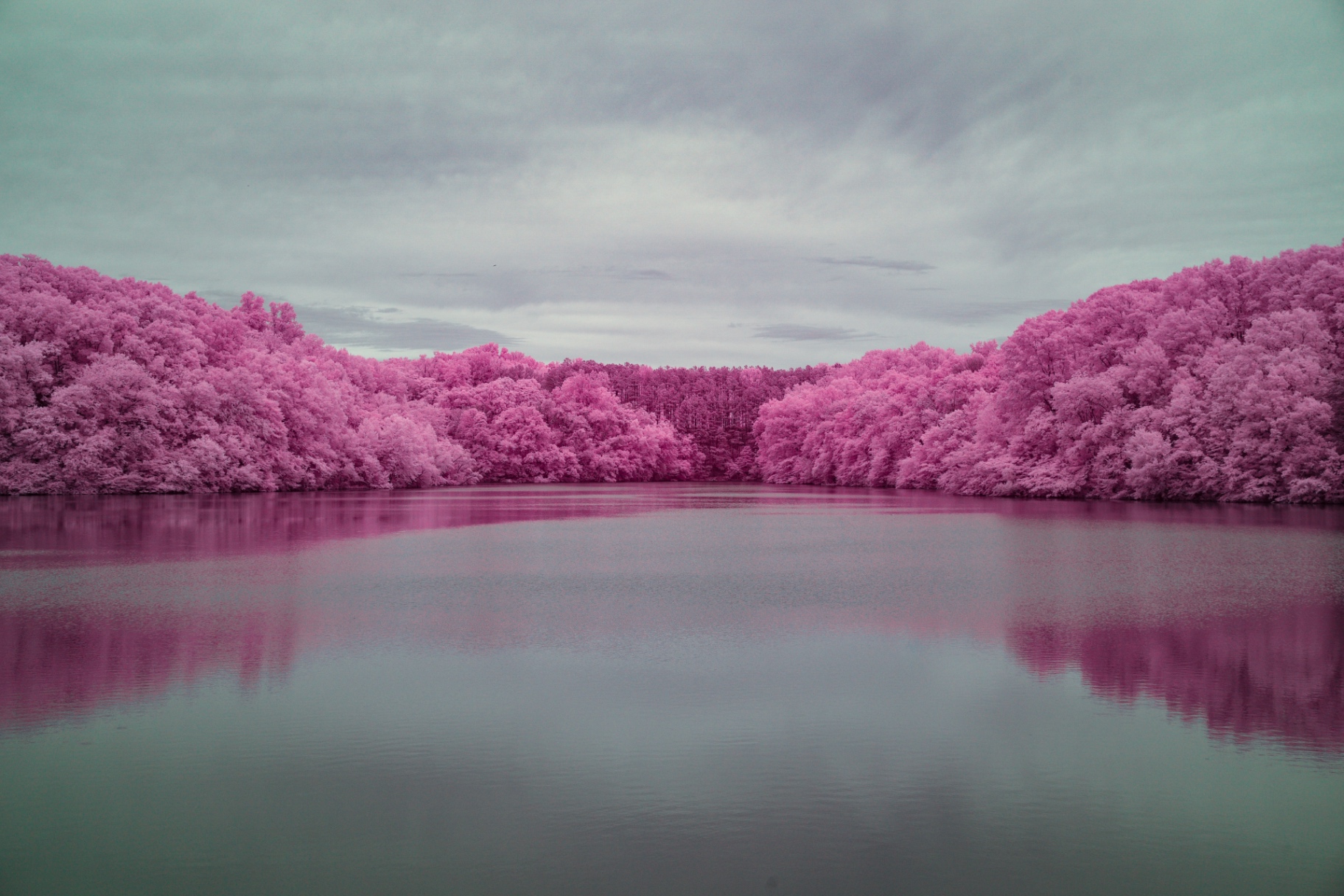
Infrared lake ringed with glowing pink forest

A field guide to the spectrum you can’t see

See the world through invisible light withInfrared Photography

Infrared photography reveals a world hiding in plain sight — glowing foliage, dramatic skies, strange colors, and landscapes that look nothing like they do to the naked eye.

Learn how it works, explore the images, and discover how to make infrared photography your own.

Start here

What infrared photography actually is.

Infrared photography lets you see the world through invisible light — it records wavelengths your eyes will never detect on their own. Every digital camera sensor is naturally sensitive to near-infrared light, roughly 700 to 1000 nanometers, but manufacturers glue a hot mirror over the sensor to block it so ordinary daylight photos look normal. Remove or replace that filter and the same camera starts seeing the world through invisible light: chlorophyll in leaves reflects infrared brilliantly, so trees and grass glow white or pink, while blue sky and clear water absorb it and drop to deep, dramatic near-black.

There are two ways in. The first is a converted camera — a permanent infrared conversion where a technician swaps the internal hot mirror for an infrared filter cut at a chosen wavelength. A 590nm conversion gives warm, candy-colored false color. 665nm is the balanced middle ground most of the images on this site were shot with. 720nm is the classic infrared look that channel-swaps into rich color or converts beautifully to black and white. 850nm skips color entirely and delivers pure monochrome. Converted cameras autofocus normally, meter normally, and shoot handheld at everyday shutter speeds, which is why converting an older body you already own is the cheapest serious way to start.

The second route is full spectrum. Here the hot mirror comes out and nothing wavelength-specific replaces it, so the camera sees ultraviolet, visible, and infrared light all at once. You then choose the look in the field with screw-on lens filters or clip-in filters that sit in front of the sensor. One full spectrum body plus a small set of filters covers every wavelength, including the Aerochrome-style red-foliage results people fall in love with. The tradeoff is that you carry and change filters instead of just lifting the camera to your eye.

Lenses matter more in infrared than they do in visible light. Some designs produce a bright central hot spot at smaller apertures because their internal coatings were never engineered for infrared wavelengths. Older, simpler kit lenses are frequently the best performers. That is why this site hosts a searchable lens database organized by camera mount, so you can check a lens before you buy it rather than after.

Everything here is written by a working photographer who has converted, bought, sold, and shot a decade of infrared bodies — Nikon D70, D40X, D60, D200, D300, D750, Z7II, and a full-spectrum Canon 40D among them. The guides explain conversions, filters, wavelengths, lens hot spots, and post-processing in plain English, the gallery shows what each wavelength actually looks like, and the free guide below walks you from curiosity to your first infrared frame.

Selected work

A different light.

See the full archive →
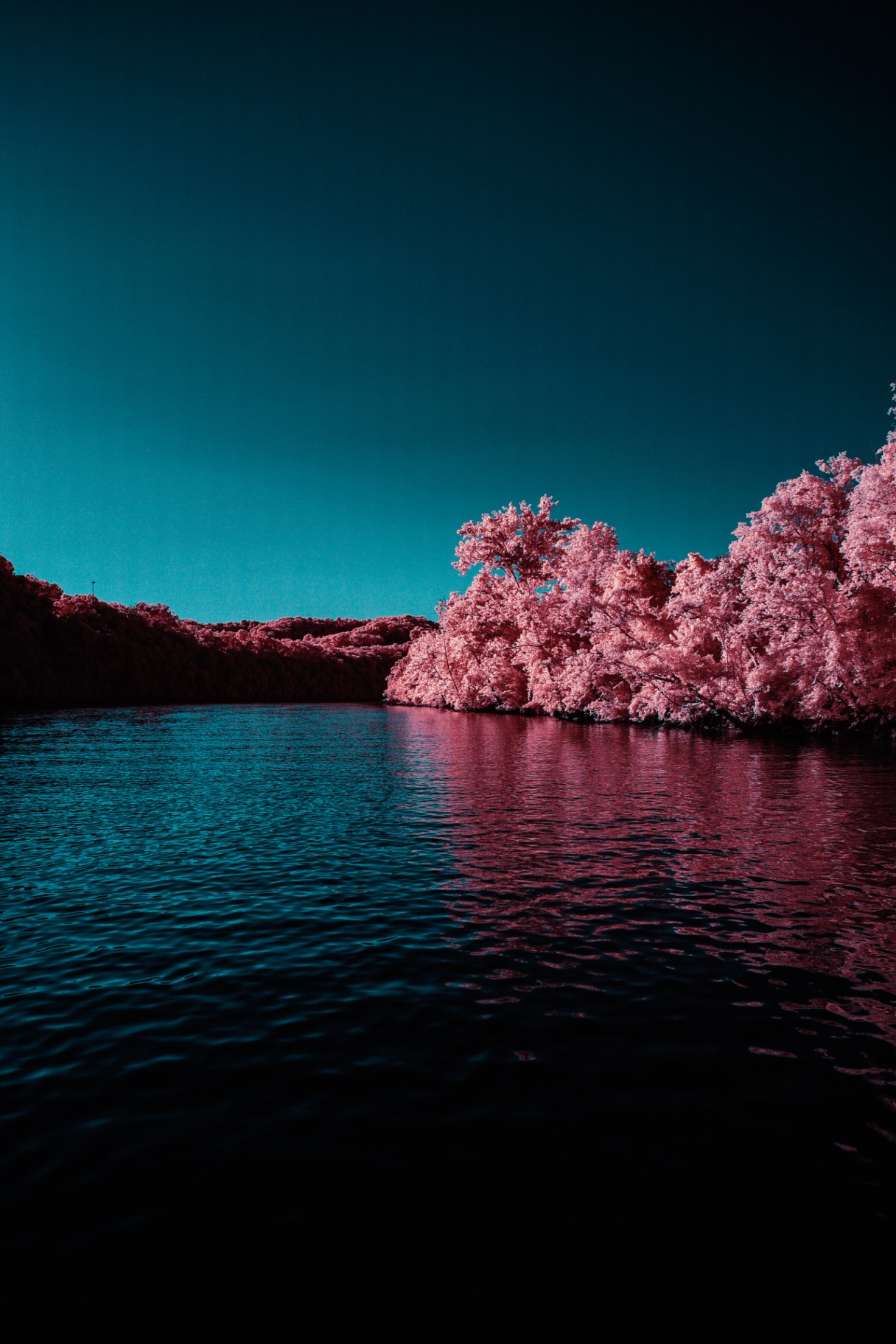
Infrared cove with pink foliage and teal water
Still cove, pink canopy — 590nm false color.
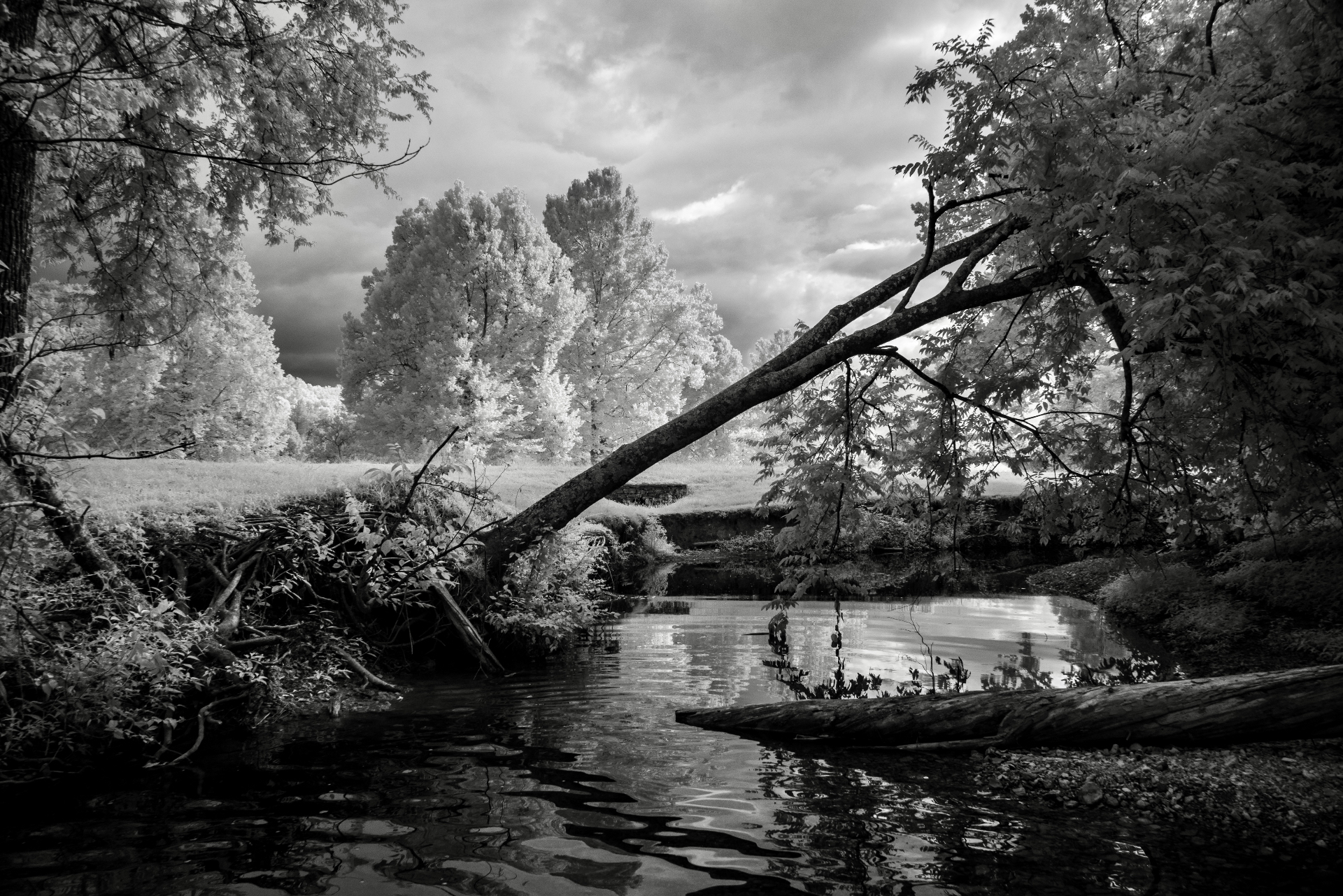
Black and white infrared creek with fallen tree
Fallen tree over the creek — 720nm monochrome.
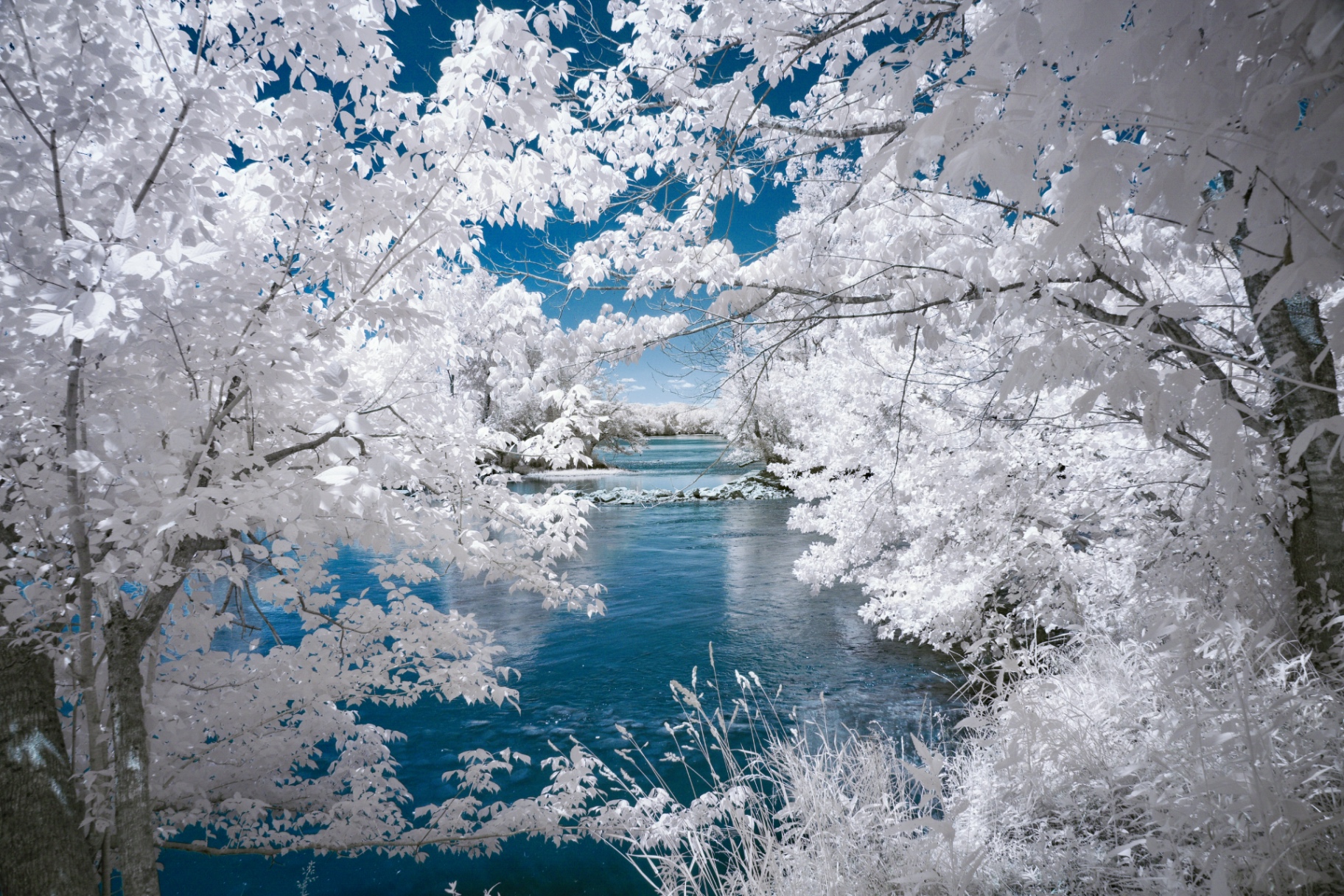
White infrared foliage over a blue river
White foliage over the river — 665nm false color.
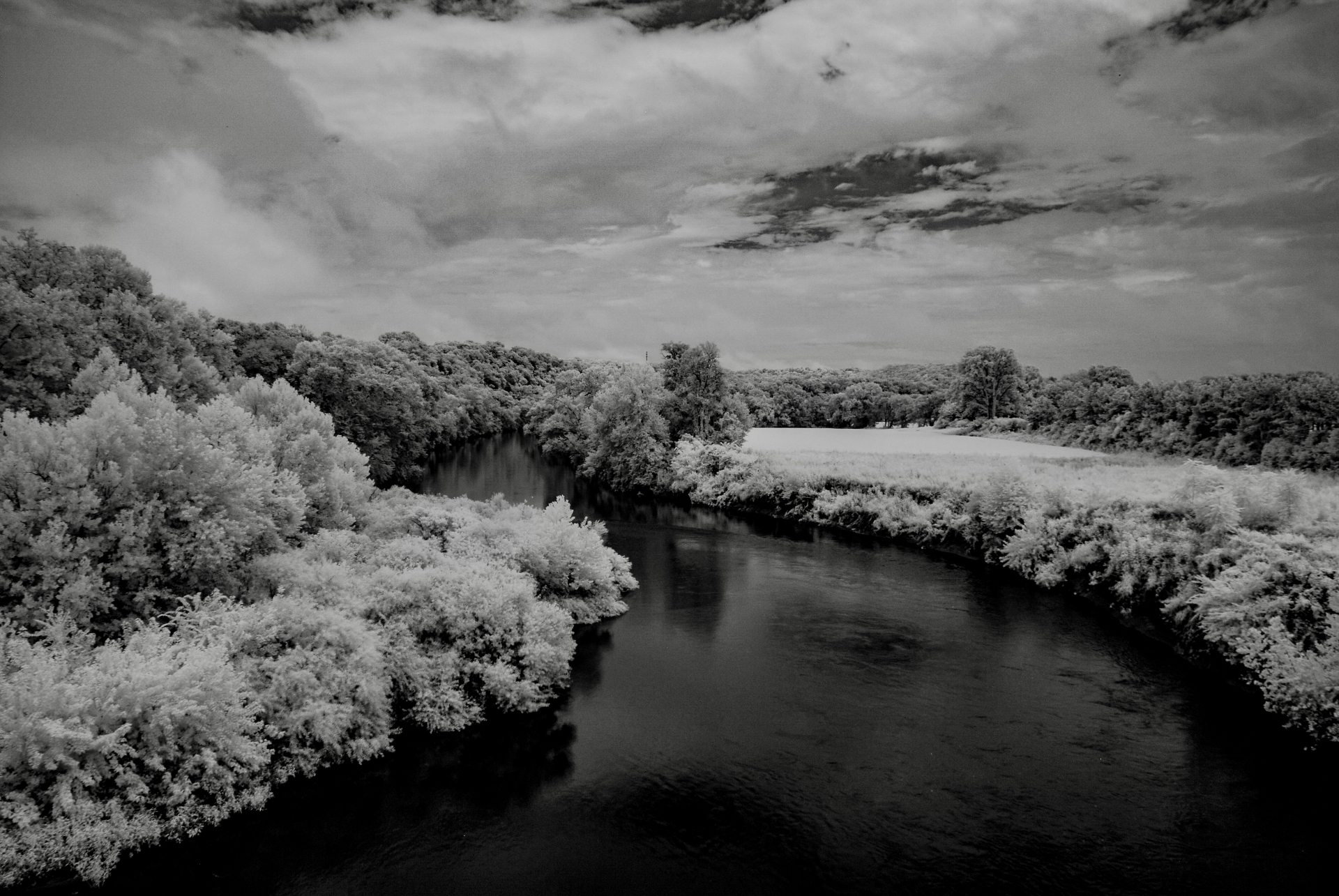
Black and white infrared river bend
River bend — 720nm monochrome.

“The work you make when nobody’s paying you is the work that eventually pays for everything else — including the person you become while making it.”

From the ebook

About the photographer

The person behind the lens.

I’m Mike Cimorelli — a photographer chasing invisible light, from self-converted Nikon bodies to the Z7II I shoot today. Read how I fell into infrared, what I use, and why this work matters.

Camera conversions

How the sensor learns to see infrared.

A plain-English guide to converting a camera for infrared — choosing between 590nm, 665nm, 720nm, and 850nm, deciding on DSLR or mirrorless, and the full-spectrum route with clip-in or lens filters.

  • 590nm

    Warm color IR

  • 665nm

    Balanced (this site)

  • 720nm

    Classic IR / B&W

  • 850nm

    Pure black & white

Free ebook

Investing in Creativity That Fuels Your Purpose

A short, honest field guide for anyone who suspects their side practice is actually their main practice. Six chapters. No fluff. Delivered instantly, free.

  • — Why creative capital compounds differently
  • — The five investments that never look like investments
  • — A weekly practice for staying in your own frequency

Instant download. No spam, unsubscribe anytime.