
About the photographer
I photograph the light we’re not built to see.
I’m Mike Cimorelli — an infrared photographer chasing foliage, water, abandoned places, and anything that looks stranger once you strip away the visible spectrum. I built Beyond Infrared to share what I’ve learned so more people pick up a converted camera and start seeing the world differently.
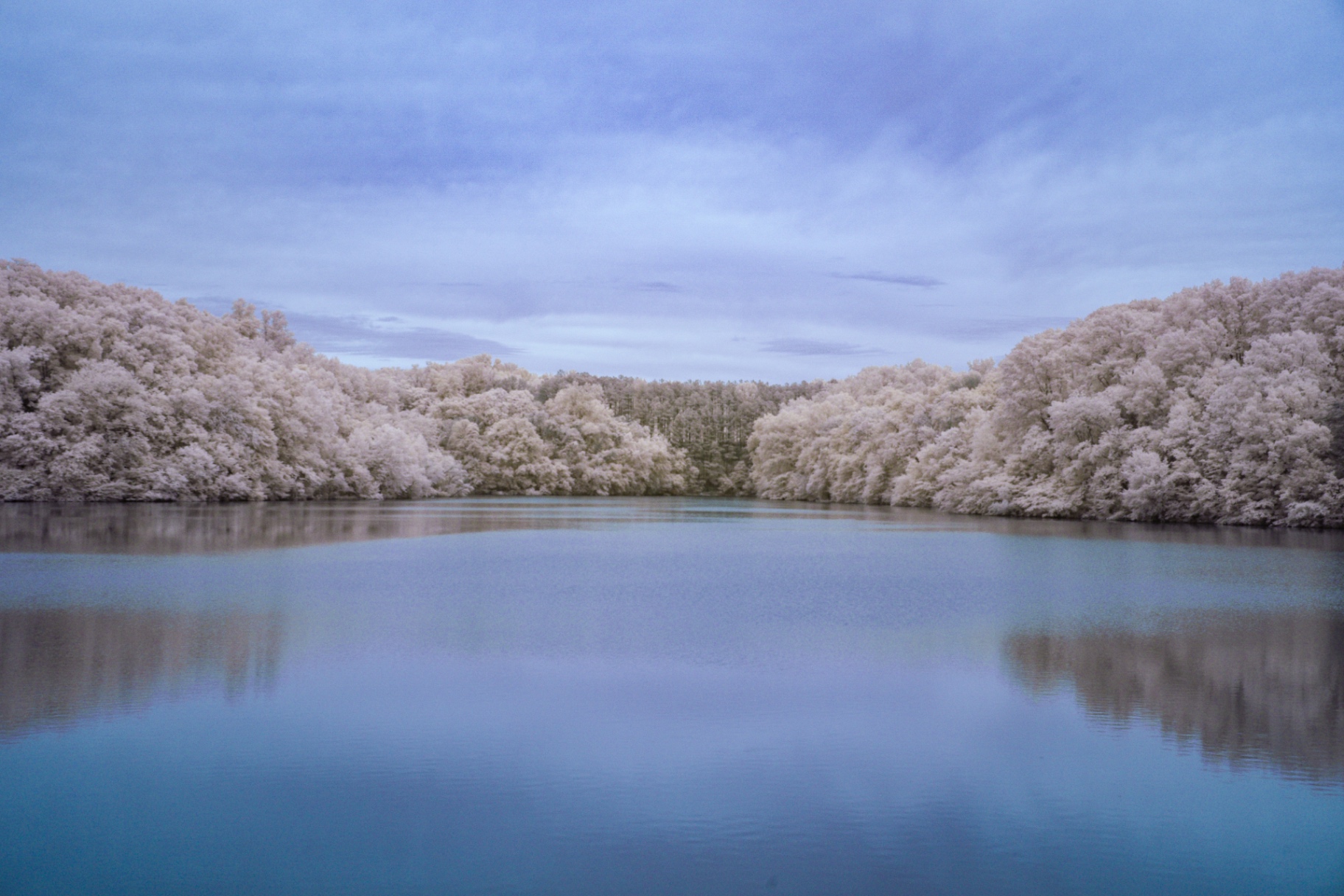
How I fell into infrared
It started with a self-converted Nikon D70 — the kind of project where you watch one YouTube video too many and suddenly you’re holding a screwdriver over your sensor. I would not necessarily recommend taking that risk. But it worked, and the 12th image I pulled off that camera changed everything.
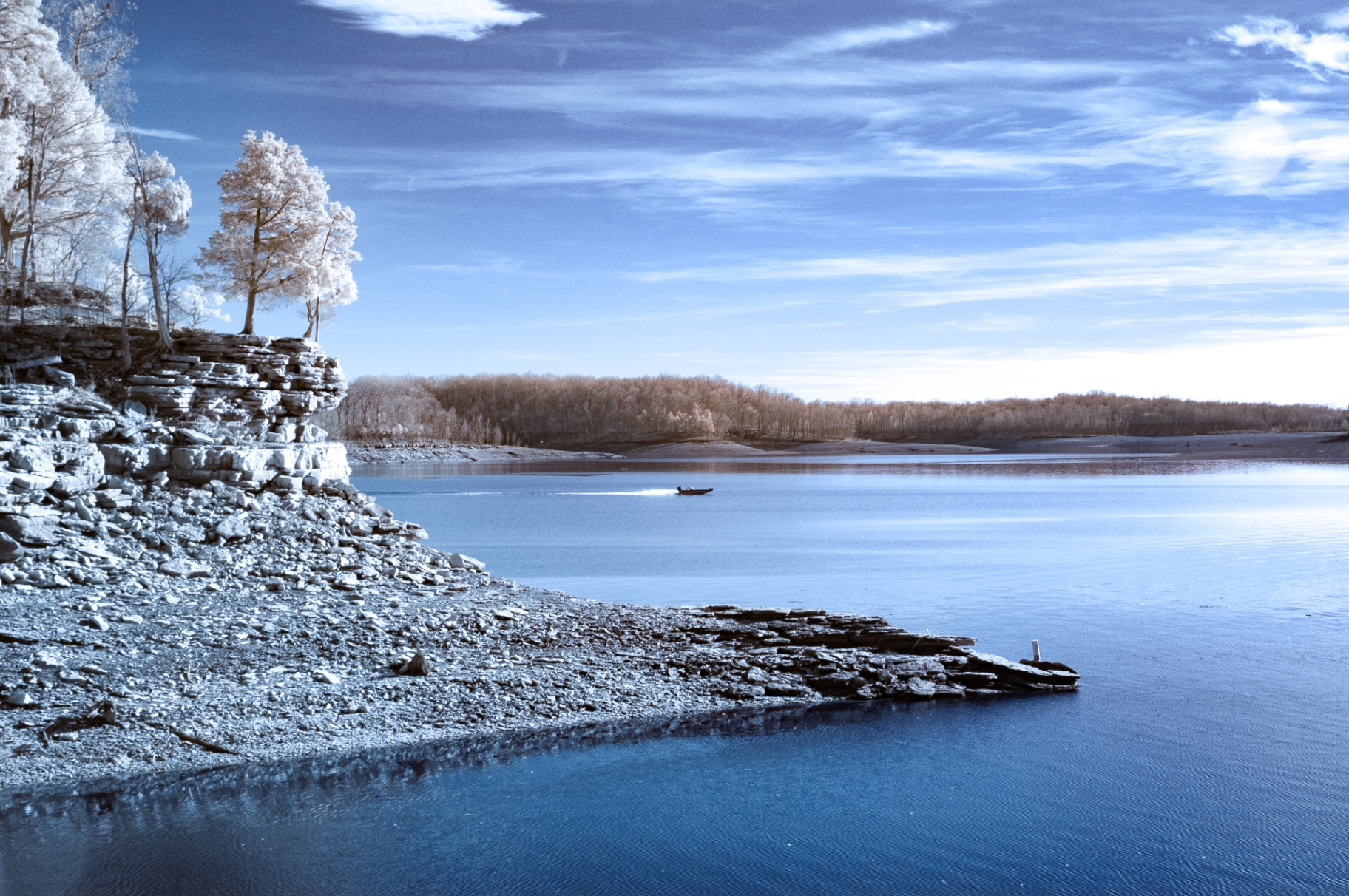
Somewhere on Flickr I had seen photographs where trees glowed white and skies turned impossibly dark. I had to know how the trees turned white. Once I saw it through my own lens, I was fascinated beyond anything I had imagined.
That led to a professional 665nm conversion on my Nikon D750, and that opened my world. The deeper I went, the more I loved the way infrared forces you to slow down and see composition, texture, and light instead of just color.
What I shoot
I am drawn to water and foliage — the two things infrared turns into something almost unrecognizable. Lately I’ve moved deeper into fine art monochrome, but I still love places with character: a rusted bridge, an overgrown field, an abandoned building in disrepair. Infrared makes the forgotten feel otherworldly.
Why this work matters
Infrared is a daily reminder that what is real is not limited to what my eyes can already see.
My faith tells me we live by more than the visible. Recovery taught me the same lesson: the most important truths — hope, healing, purpose, the possibility of becoming someone new — do not announce themselves in broad daylight. They show up quietly, underneath the surface, in the wavelengths we usually overlook.
When I raise a converted camera to my eye, I am practicing that same discipline. I am training myself to trust that something beautiful is already there, even when the world looks ordinary. That practice has carried me through darker seasons than I care to name, and it is the real reason I keep sharing these images. Infrared photography is not just a look. It is a way of seeing — and for me, it is a way of believing.
What’s in my bag
I buy, sell, and trade converted cameras more than most people probably should. I’ve shot Nikon D70, D60, D300, D200, and Canon 40D bodies over the years, and I genuinely love both the DSLR experience and the flexibility of modern mirrorless. My current favorites are:
- Nikon Z7II full spectrum — one body, every filter, every wavelength
- Nikon D750 665nm — the conversion that opened my world
- Nikon D60 590nm — golden-hour false color on demand
- Nikon D200 720nm — classic contrast and reliable black-and-white infrared
Why I made this site
I am passionate about sharing this with others. Infrared photography still feels like a secret club, but it should not be. A converted camera, the right filter, and a little patience are all it takes to start shooting a world hiding in plain sight.
New to this? Start with the infrared photography guide, or read how I evaluate infrared equipment. Equipment links are affiliate links — disclosure.
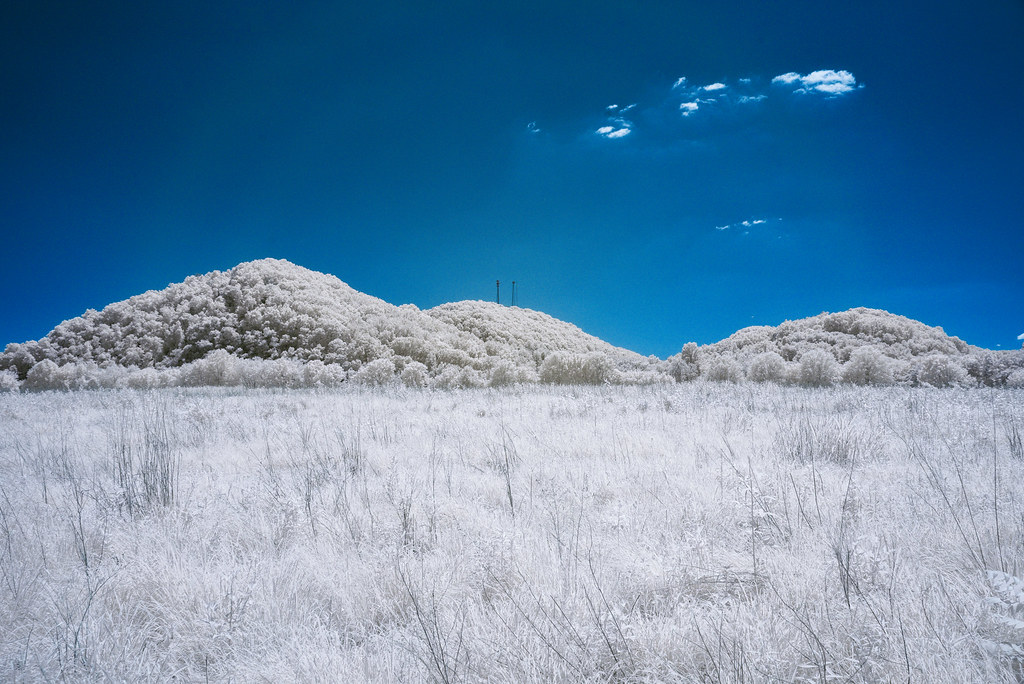
Free ebook
The guide, downloaded in seconds.
Get the free infrared photography ebook — the fastest way to learn what wavelength to choose, how to avoid lens hotspots, and how to edit your first false-color image.