
Filters
IRChrome Lite from Kolari Vision: the Aerochrome wildcard
How a military camouflage-detection film became one of the most beloved looks in infrared photography — and how the IRChrome Lite filter brings it to your camera.
Part of the infrared photography guide. Equipment links are affiliate links — disclosure.
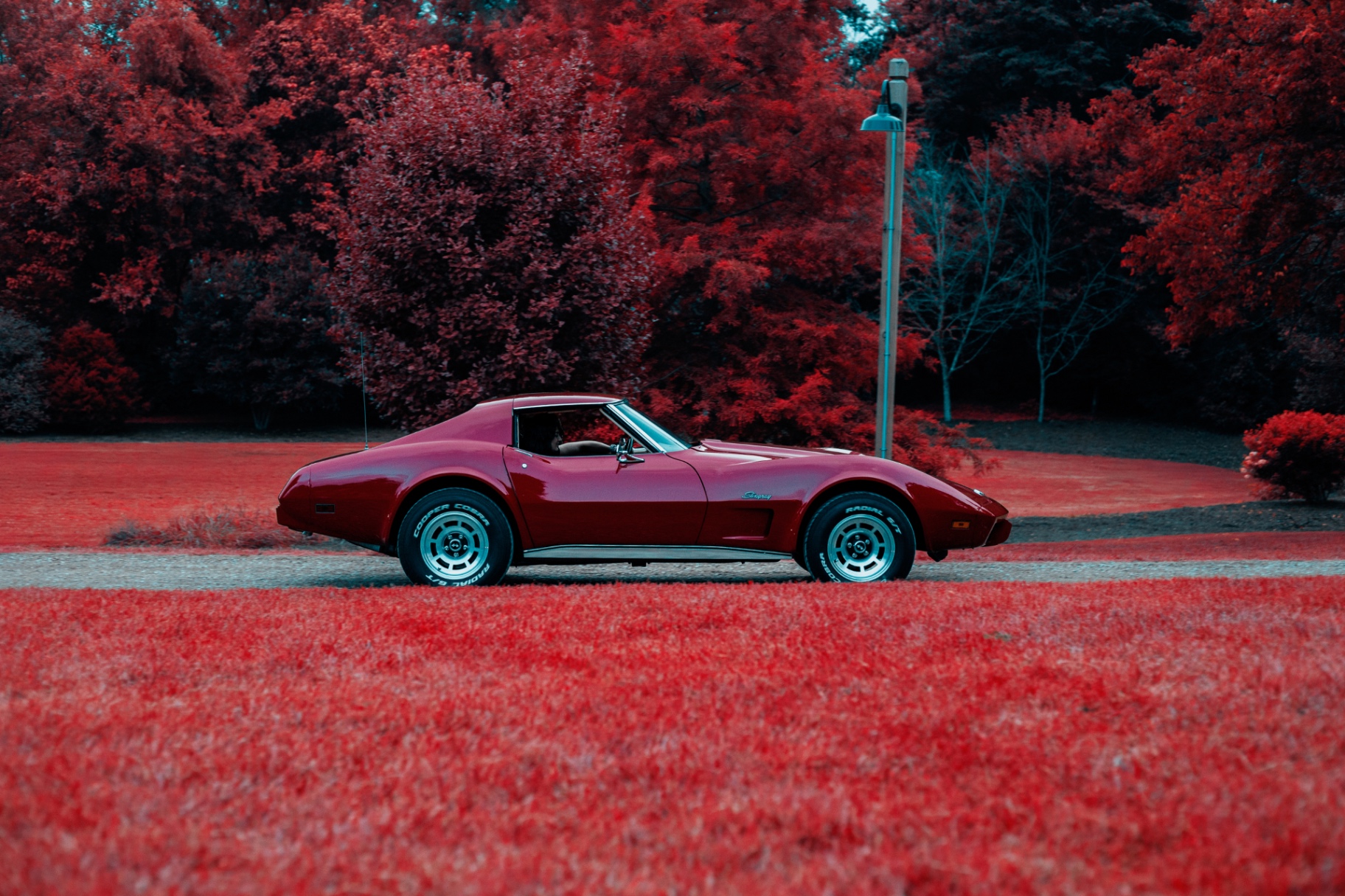
Some filters change exposure. The IRChrome Lite filter from Kolari Vision (affiliate link, opens in a new tab) changes the whole language of a photograph. Put it on a full-spectrum or appropriately converted camera and healthy foliage erupts into bright red or rusty orange, while skies slide toward a deep cyan. It is unmistakably the look of Kodak Aerochrome — the film the military originally used to spot enemy positions hiding in dense green cover.
From camouflage detection to creative obsession
Aerochrome was developed as aerial surveillance film. Its trick was making chlorophyll-rich vegetation glow in stark red-pink, so analysts could tell living canopy from painted netting, cut branches, or concealed positions. Pilots and photo interpreters used it to expose targets that visible-light photographs simply could not distinguish.
Decades later, landscape photographers realized the same false-color logic could be beautiful. The same signature that revealed hidden bunkers now turned ordinary forests into crimson canopies and turned lakes into pools of ink. What began as intelligence gathering became a deliberate artistic choice — and a way for photographers to make the familiar world feel alien in the best possible sense.
Why the look works
Healthy leaves reflect a lot of near-infrared light. The IRChrome Lite filter passes a narrow slice of infrared while suppressing the greens our eyes normally read, then maps the remaining channels so foliage records warm and skies record cool. The result feels cinematic and nostalgic at once — part documentary, part dream.
- Foliage: bright red to rusty orange, depending on the plant and the light.
- Skies and water: deep teal to cobalt, giving the image its signature Aerochrome contrast.
- Skin and fabric: unpredictable and surreal, which is half the fun for portrait work.
Two ways to use it
Clip-in filters
Kolari’s clip-in version drops into a mirrorless body behind the lens mount. One filter works with every lens you own, nothing blocks the front element, and the EVF previews the effect live. It is the cleanest way to shoot IRChrome if you already have a full-spectrum mirrorless body.
Screw-on lens filters
The screw-in version threads onto the front of your lens like any circular filter. It works on full-spectrum bodies, dedicated IR conversions, and even some unconverted cameras with longer exposures. It is more flexible across camera systems and easier to move between bodies.